The 5-Hour YouTuber Review: Is Gabe Bult's $997 Course Worth It?
The 5-Hour YouTuber is a 45-lesson course by Gabe Bult, priced at $997, that teaches creators to build a YouTube channel generating $20,000 to $40,000 per month while working five hours a week. Before you spend $997, you can read the full breakdown for free on coursetoaction.com — no credit card required.
If you've been researching YouTube growth courses, you've probably come across The 5-Hour YouTuber by Gabe Bult. The promise is bold: build a YouTube channel generating $20,000 to $40,000 per month while working only five hours a week. The price is $997.
Before you buy, here's an honest breakdown of what the course actually contains, who it's built for, and whether the investment makes sense for your situation.
Who Is Gabe Bult?
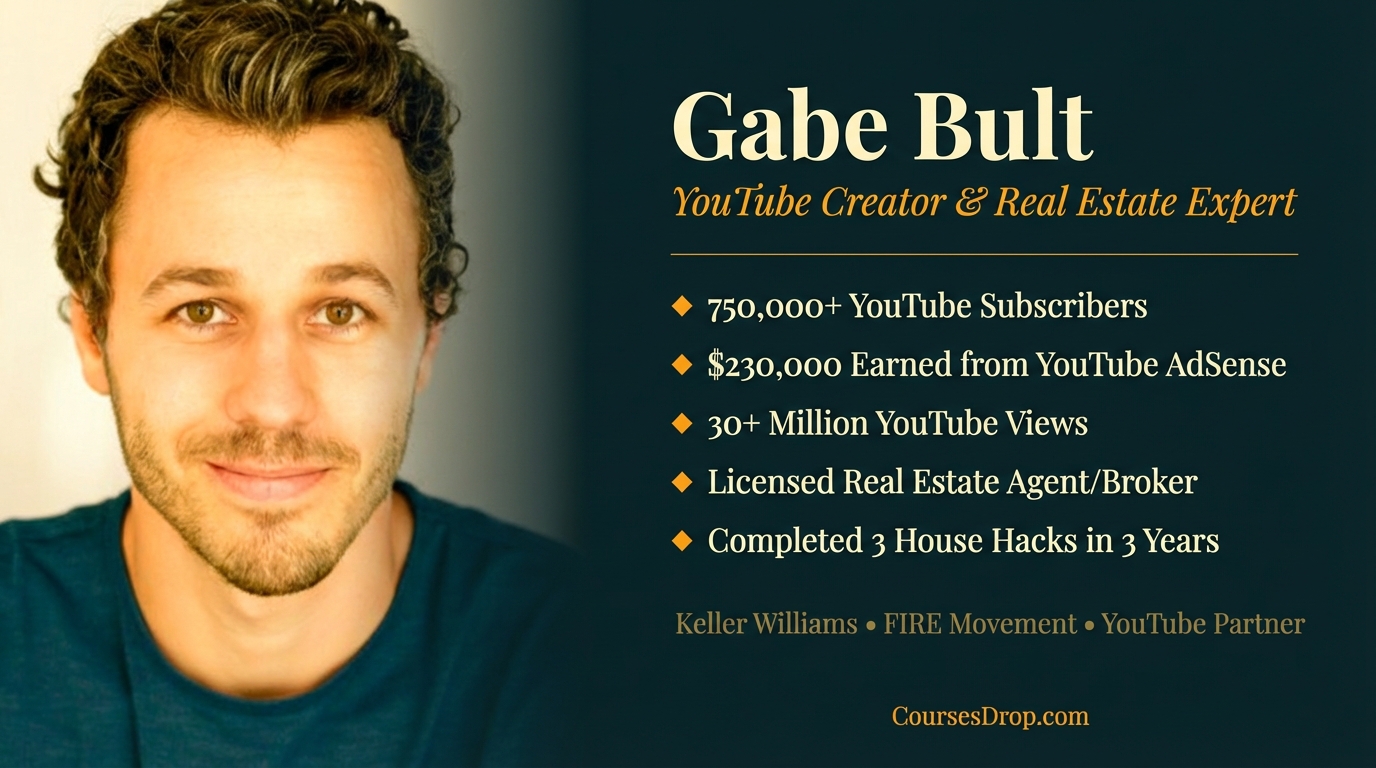
Gabe Bult is a YouTube creator in the personal finance and productivity space. His credibility comes directly from his results: $360,000 in lifetime AdSense earnings, with a single video generating $225,000 in revenue. He built his channel to a level where it produces significant monthly income while he works a limited number of hours per week — and he documented the system that made that possible.
He's not a YouTube coach who never had a channel. He's a creator who built something, figured out what worked, and packaged it into a teachable framework. That distinction matters when evaluating whether to trust the methodology.
What's Inside the Course
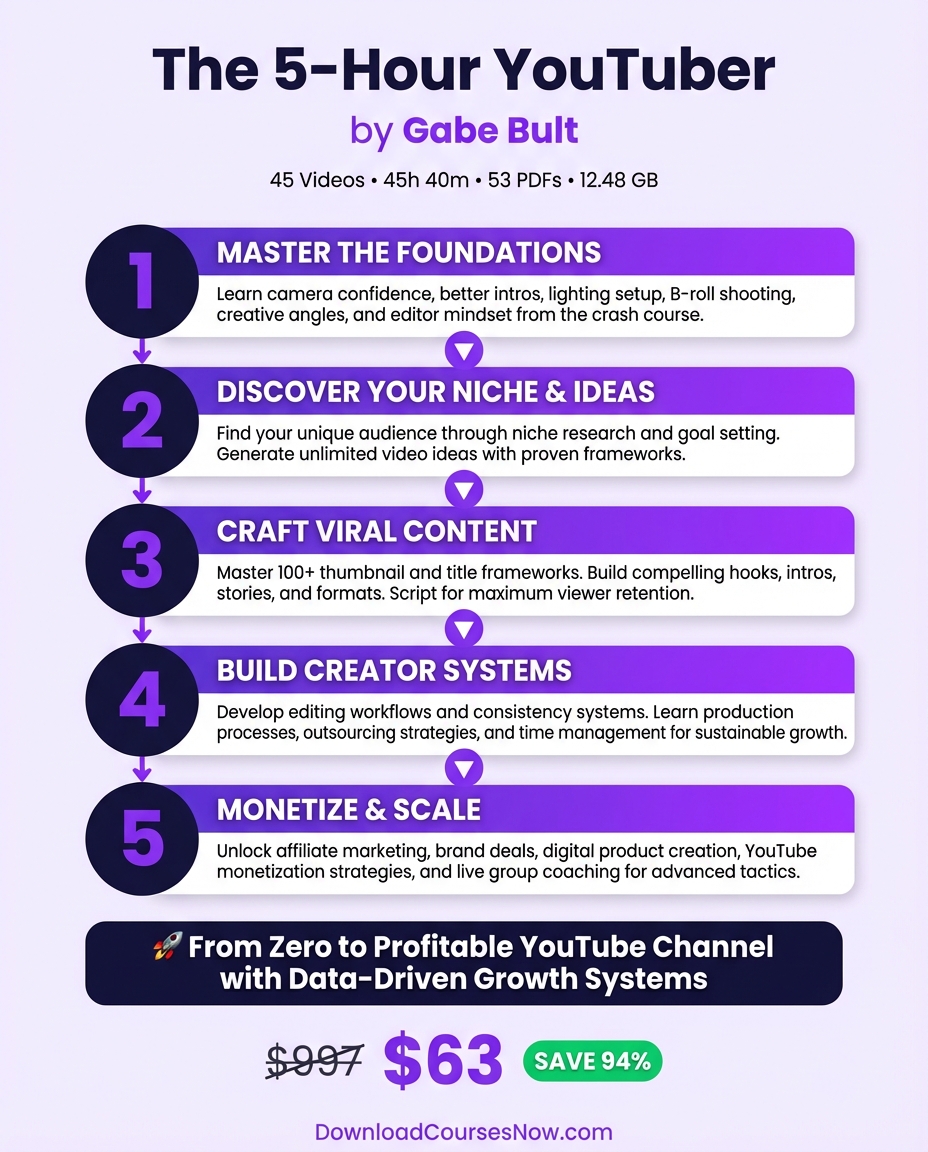
The course contains 45 lessons totaling 45.4 hours of video content. That's a substantial amount of material, and it covers the YouTube growth process end to end. Here's a look at the core frameworks taught:
The 80/20 Production Rule
This is the philosophical foundation of the course. Gabe argues — with data to back it up — that thumbnail quality and the first 30 seconds of a video account for the majority of a video's performance. Everything else (editing quality, B-roll, color grading, background aesthetics) has a much smaller impact than most creators assume.
The practical implication is that you should spend disproportionate time and energy on those two elements, and outsource or simplify everything else. This is what makes the five-hour workweek claim plausible — not by posting less, but by eliminating low-leverage work.
The Thumbnail-First Workflow
Rather than treating thumbnails as a post-production afterthought, this framework makes the thumbnail the starting point of the content creation process. You design the thumbnail concept before you record a single frame. If you can't make a compelling thumbnail for the idea, the idea probably isn't ready.
This workflow prevents a common and expensive mistake: spending a full week recording and editing a video that was never going to get clicks in the first place.
Authority Hacking
This is Gabe's framework for dramatically improving video performance through systematic thumbnail and title testing. He documents cases where small creative changes — a different thumbnail design, a rephrased title — produced 77x to 200x increases in video views. The framework teaches how to identify which variables to test, how to read early performance signals, and when to iterate versus move on.
The Four-Bucket Content Strategy
This framework addresses content planning by dividing all videos into four categories: Search Traffic Videos, Browse Traffic Videos, Authority Videos, and Trend/Collaboration Videos. Each bucket serves a different purpose in the channel's growth ecosystem, and the course teaches how to maintain the right mix based on your channel's current stage.
The Progressive Validation Ladder
Before committing full production resources to a video idea, this framework walks you through a staged validation process — testing at low cost before investing heavily. It's a risk management system for content creation.
The Avatar Research Channel
A system for deeply understanding the target viewer — their beliefs, language, frustrations, and goals — and using that understanding to make every creative decision more precise. This directly impacts thumbnail emotion, title language, and the first 30 seconds of every video.
Who This Course Is Best For
The 5-Hour YouTuber is designed for a specific type of creator. It works best for:
Creators who have already chosen a niche. The frameworks in this course are about optimizing and scaling a focused channel, not figuring out what your channel should be about. If you're still undecided on your niche, you'll get less value from the content strategy frameworks. Creators willing to build a small team. A significant part of the five-hours-a-week model depends on outsourcing video editing and other production tasks. If you're unwilling or financially unable to hire an editor, the time-efficiency claim becomes less realistic, though the core creative frameworks still apply. Creators serious about monetization. This isn't a hobby course. The frameworks are built around generating real income from YouTube — through AdSense, brand deals, and product sales. If you're building a personal creative outlet without monetization goals, the course is overbuilt for your needs. Intermediate-to-advanced creators. Beginners can learn from the course, but some frameworks assume you already understand the basics of YouTube. Complete beginners might find themselves needing to supplement with foundational material.Read the Full The 5-Hour YouTuber Breakdown
The course costs $997. The complete breakdown is $49/year.
Start free — 10 full summaries, no credit card
Who Should Pass
If any of these describe you, the course may not be the right fit right now:
- You haven't posted any videos yet and aren't sure YouTube is the right platform for you
- You're unwilling to spend money on an editor or outsource any part of production
- You're looking for a course focused on entertainment channels (gaming, comedy, vlogs) rather than information/education/business channels
- Your budget doesn't allow for both the course and the ongoing costs of running a professional channel (editing fees, tools, etc.)
Is $997 Justified?
This is the real question, and the answer depends on one thing: your earning potential.
If you're building a YouTube channel in a monetizable niche — personal finance, business, health, real estate, tech, productivity — and you're serious about turning it into a real income source, $997 is a modest investment relative to the upside. The course is teaching a system that Gabe used to generate hundreds of thousands of dollars. If even a fraction of that is replicable, the ROI is obvious.
If you're a hobbyist creator, or if you're early enough in your journey that you're not sure YouTube will work for you, $997 is a significant amount to spend before you've validated the channel at all.
A useful test: If you could consistently apply the Thumbnail-First Workflow and the 80/20 Production Rule, would your current videos perform noticeably better? If the answer is yes, the course is worth serious consideration.
What to Expect After Buying
The course is self-paced with 45 lessons across 45.4 hours of content. That's several weeks of focused learning if you're moving through it systematically. The frameworks are practical rather than theoretical — Gabe provides specific processes, templates, and examples rather than high-level advice.
The outsourcing framework includes guidance on finding and briefing editors, building SOPs for production, and managing a small creative team. This is practical operational knowledge that goes beyond what most YouTube courses cover.
Final Verdict
The 5-Hour YouTuber is a well-constructed course built around a genuinely differentiated insight: that YouTube success comes from repeatable systems, not heroic effort. The frameworks are specific, the creator's results are documented, and the methodology is teachable.It's not for everyone at $997. But for a creator in an information or business niche who is ready to build seriously and willing to implement the outsourcing model, it represents a legitimate path to a high-performing, time-efficient YouTube channel.
The course costs $997. Before you commit, read the full lesson-by-lesson breakdown on Course To Action — free account, 10 summaries, no credit card required. Every summary and lesson has audio. AI tools let you apply Bult's frameworks to your specific channel situation or generate a full action plan. Course To Action covers 110+ courses, so you can compare before you decide.
For the full course breakdown and to decide whether it's the right fit, visit coursetoaction.com/.
Read the Full Breakdown Before You Spend $997
The course costs $997. The complete breakdown — every framework, every lesson, every limitation — is $49/year.
Know exactly what you're getting before you commit. Every module summarised, every action step extracted. Read or listen — every summary has audio.
Start free — 10 full summaries, no credit card required