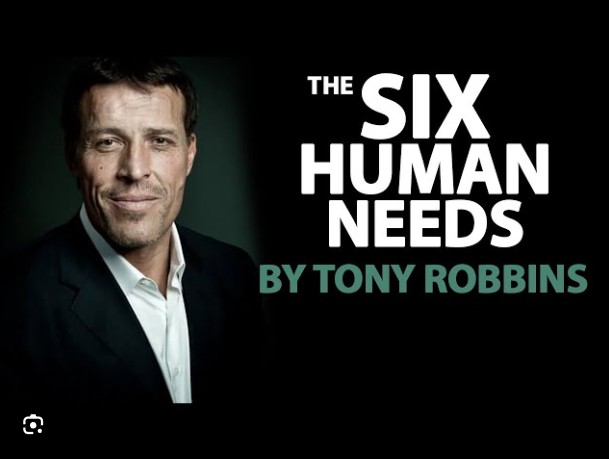
Six Human Needs by Tony Robbins: Before You Buy
There are two types of Tony Robbins courses. The first type is Tony Robbins delivering content — high-energy, experiential, built for the live-event format, with the full weight of his personality behind it. The second type is material from the Robbins ecosystem delivered by trained practitioners, using Tony's frameworks but in a more structured, teachable format. This course is the second type.
That is not a criticism. In some ways, it is an advantage. But you should know it before you spend your money.
The Six Human Needs course is taught by Keith Leonard across 42 lessons and is available on coursetoaction.com alongside 110+ other premium courses. Access costs $49 for 30 days or $399/year — one payment, no subscription, no auto-renewal. You can also read the full structured summary for free before buying: create a free account and get 10 summaries with no credit card required.
This is an honest breakdown of what the course is, what it is not, who it is best suited for, and what you will actually walk away knowing.
What the Course Is
Six Human Needs is a 42-lesson course built around Tony Robbins' foundational framework for understanding human motivation. It is taught by Keith Leonard through Robbins-Madanes Training — the official coaching certification arm of the Robbins organization. The curriculum covers the Six Human Needs Model in depth, along with several related frameworks that extend its practical application.
The core premise of the entire course is stated clearly in the opening: every behavior — no matter how confusing, destructive, or counterproductive it appears — makes sense when you understand which of six fundamental needs it is trying to meet. The goal is not to judge behavior. It is to decode it. And once decoded, to find better ways to meet the same needs.
What the Course Covers
The curriculum is organized around several interconnected frameworks.
The Six Human Needs Model is the centerpiece. The six needs are Certainty (safety, stability, predictability), Variety (novelty, surprise, stimulation), Significance (importance, uniqueness, mattering), Connection and Love (belonging, closeness, intimacy), Growth (expanding knowledge, skill, and character), and Contribution (giving beyond oneself, serving a larger purpose).The model divides these into two tiers. The first four — Certainty, Variety, Significance, Connection — are personality needs. Every person meets these four needs in some way, even if the methods are destructive. The final two — Growth and Contribution — are spiritual needs. They are not required for psychological survival, but they are required for genuine fulfillment. This distinction carries significant weight throughout the course.
The Driving Force is the second major framework. Every individual has two needs that dominate their decision-making above the other four. Identifying those two needs — your Driving Force — explains the majority of your major life choices, and allows you to understand why you find certain opportunities compelling and others unappealing. For coaches, it is diagnostic. For individuals, it is often revelatory. Vehicles is the concept that shifts the entire model from descriptive to prescriptive. A vehicle is any behavior, belief, relationship, or identity that a person uses to meet a need. The insight is that people do not have bad needs. They have bad vehicles. Change the vehicle — find a better way to meet the same need — and behavioral change becomes sustainable without requiring extraordinary willpower. This framework reframes almost every self-help conversation about habit change. The Rule of Three explains why some behaviors are nearly impossible to stop: if a behavior meets three or more of the six needs simultaneously, it functions as what the course calls an addiction — not necessarily chemical, but structural. To replace such a behavior, the replacement must also meet three or more needs. This sub-principle alone is worth the price of admission for anyone who works with people. The Three Decisions Model connects the Six Human Needs to a broader theory of how experience is created. In every moment, you are making three decisions: what to focus on, what meaning to assign to that focus, and what action to take. The Six Human Needs determine which focuses feel natural, which meanings feel true, and which actions feel worth pursuing.Who Gets the Most Out of This Course
The course is most directly valuable for three audiences.
Coaches and aspiring coaches. The Six Human Needs Model is one of the most powerful diagnostic frameworks in professional coaching. It gives coaches a way to make sense of client behavior quickly and accurately, and a vocabulary for describing change that clients find immediately accessible. Keith Leonard teaches it with explicit application to coaching conversations, so the translation from theory to practice is built in. People managers and leaders. The framework reframes every frustrating employee behavior from "this person is difficult" to "this person's needs are unmet by this role or environment." That shift produces better interventions, better feedback conversations, and better hiring and role-design decisions. The Driving Force framework, in particular, is immediately useful for understanding what different team members need to stay engaged and perform well. People in personal transitions. Career change, relationship change, relocation, any major life shift is attended by a period of confusion and identity instability. The Six Human Needs Model offers a map: here are the needs your previous chapter was meeting, here is what your new chapter will need to provide, and here is how to design the transition so it does not leave you structurally depleted. This is not therapeutic in the clinical sense, but it is genuinely orienting.Read the Full Six Human Needs by Tony Robbins Breakdown
The course costs $Included with coursetoaction.com ($49/30 days or $399/year). The complete breakdown is $49/year.
Start free — 10 full summaries, no credit card
Who Should Look Elsewhere
People seeking business tactics or productivity systems. This course operates entirely at the level of motivation and behavior. It explains why people do what they do. It does not cover sales techniques, business strategy, productivity workflows, or operational systems. If your primary need is tactical, this is not the right course for that goal. People expecting Tony Robbins to teach throughout. The course is built on Tony's frameworks and is produced under the Robbins-Madanes umbrella, but Keith Leonard delivers the content. Tony's voice and persona are present in the philosophy, not in front-of-camera instruction. If you want the live-event Tony Robbins experience, this is a different format. People in acute crisis. The Six Human Needs Model is an intellectual framework for understanding behavior. It is not a therapeutic intervention. People navigating serious mental health challenges, grief, trauma, or acute instability will benefit more from clinical support than from a motivational framework, at least initially.The Format
42 lessons positions this as a substantive course, not a brief overview. The structure allows for each framework to be taught, illustrated with examples, and applied in practice. The Robbins-Madanes lineage means the material is polished and organized — this is not a loosely assembled collection of ideas, but a taught system with clear progression.
The course is delivered in video lesson format. The pacing is deliberate: concepts are introduced, illustrated, and then extended with the related frameworks before the next concept is introduced. If you are the kind of learner who prefers to understand the architecture of an idea before applying it, the structure will work well for you.
The Bottom Line
The Six Human Needs course is not a self-help course in the typical sense. It is a behavioral decoding system. It will not give you a morning routine, a productivity hack, or a sales script. What it will give you is a reliable answer to one of the most persistently difficult questions in human experience: why do people — including yourself — keep doing things that are not working?
That answer is genuinely useful. It is useful in coaching rooms, in management conversations, in relationships, and in the quiet moments when you are trying to understand your own choices. The vehicle-replacement principle alone — the idea that you can change a behavior not by eliminating the need behind it but by finding a better way to meet that need — is a practical insight with immediate application.
For coaches, people managers, and anyone in personal transition who is willing to engage seriously with a framework rather than a formula, this course delivers. Go in knowing what it is, and it will likely exceed your expectations.
Before you commit, you can read the full structured summary of this course for free. Create a free account at coursetoaction.com — no credit card, 10 summaries included. Every summary comes with audio, and the platform includes AI tools ("Apply to My Business" and "Generate Action Plan") to help you apply what you read to your own situation. The course itself is included with access to 110+ courses at $49 for 30 days or $399/year, one payment, no subscription.
Full course details at coursetoaction.com/.
Read the Full Breakdown Before You Spend $Included with coursetoaction.com ($49/30 days or $399/year)
The course costs $Included with coursetoaction.com ($49/30 days or $399/year). The complete breakdown — every framework, every lesson, every limitation — is $49/year.
Know exactly what you're getting before you commit. Every module summarised, every action step extracted. Read or listen — every summary has audio.
Start free — 10 full summaries, no credit card required