Showrunner by Ryan Lee — Before You Buy: An Honest Breakdown
Before you spend $299 on Showrunner, here is what you should know. This article gives you a clear picture of what the course actually teaches, who it was built for, who it was not built for, and what the real tradeoffs are — so you can decide with full information rather than sales-page optimism. No affiliate enthusiasm. No vague praise. Just the information you need.
One thing worth knowing upfront: Showrunner is available through Course To Action, a library of 110+ premium courses. You can start free — no credit card required — with 10 summaries and 3 AI credits. Every summary includes audio. If you decide to subscribe, access runs $49 for 30 days or $399 per year with no auto-renewal. That context matters when you are weighing a $299 standalone purchase.
What Showrunner Is
Showrunner is a course by Ryan Lee — a serial entrepreneur with six company sales on his record — that teaches solo creators how to build a fictional world around their expertise instead of competing on content quality or credentials.
The course sits in the Branding and Positioning category. It contains 3 lessons and approximately 5.2 hours of video. It costs $299.
The central argument is this: the only durable competitive moat for a solo creator is a fictional world that fans want to live inside. Customers forget products. Fans join worlds. Every framework in the course is built to help you construct that world deliberately.
The Core Framework: Seven Show Codes
The primary deliverable in Showrunner is a framework called the Seven Show Codes. These are the structural components Ryan Lee argues every sustainable creator world needs. Here is what each one covers:
1. Origin Story — The founding myth of why your world exists, not just why you are credible. A world-building origin story explains why this particular place had to exist, told in a way that makes the audience understand they were always meant to find it. 2. Identity — The tribal label your audience wears inside your world. What do members call themselves? What does that name signal to others? Identity is the mechanism that turns an audience into a tribe. 3. Characters — The recurring archetypes that populate your world. These are the recognizable types your audience sees themselves in — the Skeptic, the Reluctant Expert, the Obsessive Builder. Characters make case studies feel like story beats rather than data points. 4. Rules and Rituals — What your world believes about the right way to do things, and the repeated behaviors that signal belonging. Rituals create behavioral investment that is much stickier than information consumption. 5. Artifacts — The objects, language, and symbols that carry your world's meaning across time and platforms. A proprietary method name. A phrase your audience adopts. A visual framework they reference and share. 6. Portals — The deliberate entry points through which new people enter your world. Portals are different from lead magnets because they initiate someone into a world rather than capturing an email address. 7. Progression — The path through your world. How members advance, deepen their involvement, and achieve recognition over time. Without progression, even loyal fans eventually disengage.
Supporting Frameworks
Beyond the Seven Show Codes, Showrunner includes several additional frameworks:
Four Timeline Framework — How to sequence your world-building efforts across different time horizons so you are not trying to build everything simultaneously. 1-3-5 Daily System — A daily content and engagement structure designed to keep your world active without burning out the creator. Traffic Playbook Persona Filters — A system for identifying which traffic sources and platforms are populated with people who are predisposed to join worlds rather than just consume content. Product-World Integrity — A principle for ensuring that every product you create feels like it belongs inside the world you have built, rather than feeling like a separate launch disconnected from your brand.The Case Study Worth Examining
The most concrete example in Showrunner is James, who turned a kettlebell training business into "The Backyard Society" in 24 hours by applying the Seven Show Codes.
This example is useful because it shows the speed at which world-building can happen when the codes are applied deliberately, and it illustrates the specific kind of transformation the course is about. James did not create new content, build a new product, or acquire new skills. He reframed what already existed around a world with a name, an identity, and a clear sense of who belongs.
The result is a brand that competitors cannot replicate by copying the curriculum. You can copy kettlebell programming. You cannot copy The Backyard Society.
Read the Full Showrunner Breakdown
The course costs $299. The complete breakdown is $49/year.
Start free — 10 full summaries, no credit card
Who This Course Is Right For
Showrunner produces the most leverage for a specific kind of creator:
Course creators watching sales decline. If your conversion rates are dropping while your content quality and credentials remain strong, this course is diagnosing the right problem. You are probably competing on dimensions that commoditize quickly. Coaches competing on credentials. If you feel like potential clients evaluate you the way they evaluate a contractor — comparing your rate to five other rates — the Identity and Characters codes in particular will help you build something that is not comparable by nature. Established creators with a topic and an audience. The Seven Show Codes work best when there is already something to build around. You need a topic, some lived experience in it, and ideally some audience, even a small one.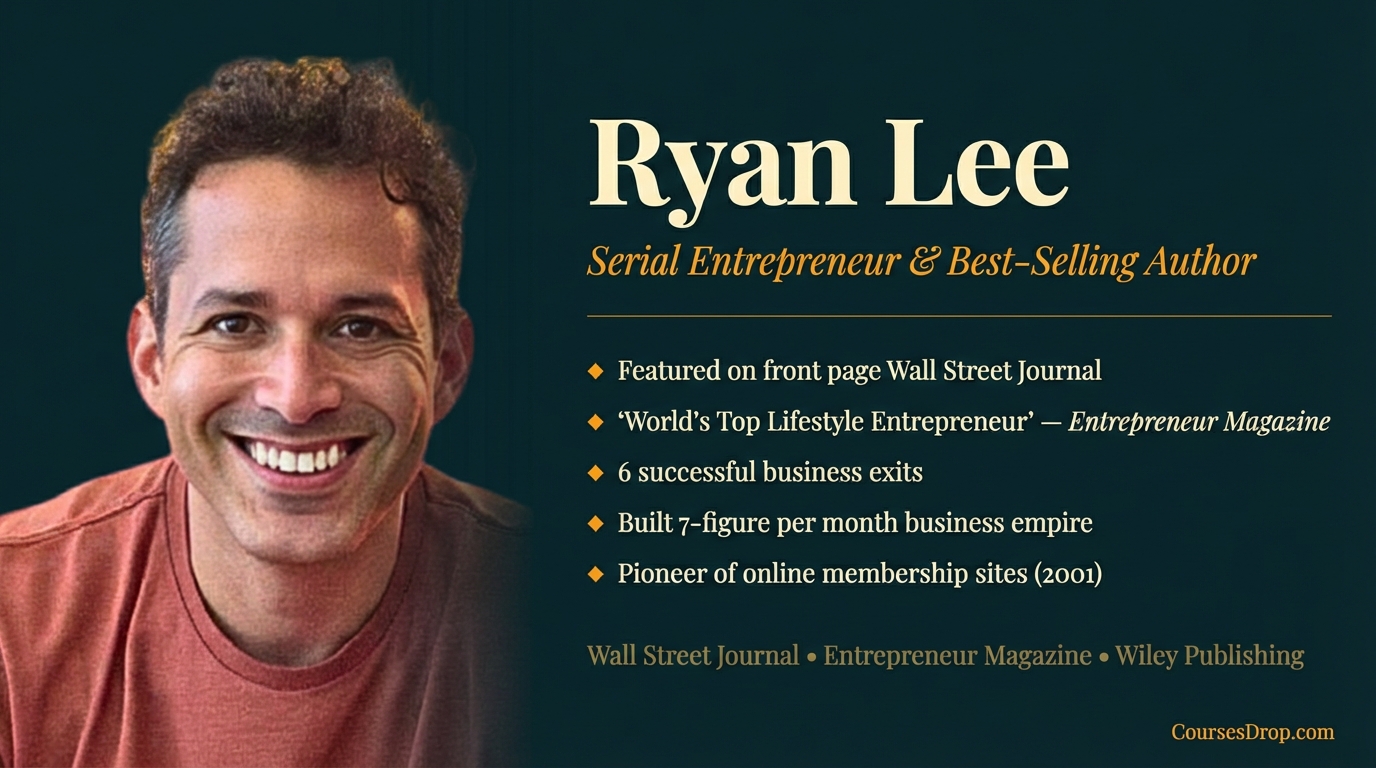
Who Should Pass
Be honest with yourself about these situations before buying:
Beginners without a validated topic. Showrunner assumes you have something to build a world around. If you are still in the stage of figuring out what your expertise is or whether anyone wants it, the world-building frameworks will feel like building architecture for a house that does not have a foundation yet. Analytical marketers who need revenue projections. Ryan Lee teaches narrative architecture, not financial modeling. If you are the kind of person who wants a projected ROI before committing to a branding shift, you will find the course frustrating. There are no spreadsheets here. The value is structural and compound, not linear and immediate. People expecting tactical marketing playbooks. Showrunner is a branding and positioning course at its core. If you came looking for funnel structures, ad copy frameworks, or email sequence templates, this is not that. The course builds the world that all of those tactics eventually serve — but it does not build the tactics themselves.The Price Question
$299 is not an insignificant amount for a 3-lesson, 5.2-hour course.
The honest argument for the price is that you are not buying information — you are buying a structural framework for how you position everything else you do. If the Seven Show Codes change how you name your community, how you frame your content, and how you build your product ladder, the compounding value of that shift is worth considerably more than $299. The cost-per-hour of video is roughly $57, which is above average for the category.
The honest argument against the price is that the frameworks are conceptual rather than mechanical. You will leave with a clear picture of what to build. You will not leave with a done-for-you version of it. The implementation is on you, and for creators who struggle to translate concepts into execution, that gap matters.
The Bottom Line
Showrunner is a focused, well-argued course that solves a specific problem: how do you build a creator brand that competitors cannot replicate by copying your content?
If you are an established creator who is competing in a crowded market and feeling the commoditization squeeze, the Seven Show Codes framework offers a genuine structural solution. Ryan Lee's argument — that a fictional world is the only truly sustainable moat for a solo creator — is compelling and supported by concrete examples.
If you are a beginner, or if you need financial modeling before you will invest in a positioning shift, you are not the right buyer for this course.
For the right creator, $299 is a reasonable price for a framework that changes how you think about your entire brand. For the wrong one, it is an interesting set of ideas that will not go anywhere without the context to apply them.
Before paying full price, remember you can start free at Course To Action — no credit card, 10 summaries with audio included, and 3 free "Apply to My Business" AI credits to test how the frameworks map to your situation.
See the full course details at coursetoaction.com/.
Read the Full Breakdown Before You Spend $299
The course costs $299. The complete breakdown — every framework, every lesson, every limitation — is $49/year.
Know exactly what you're getting before you commit. Every module summarised, every action step extracted. Read or listen — every summary has audio.
Start free — 10 full summaries, no credit card required