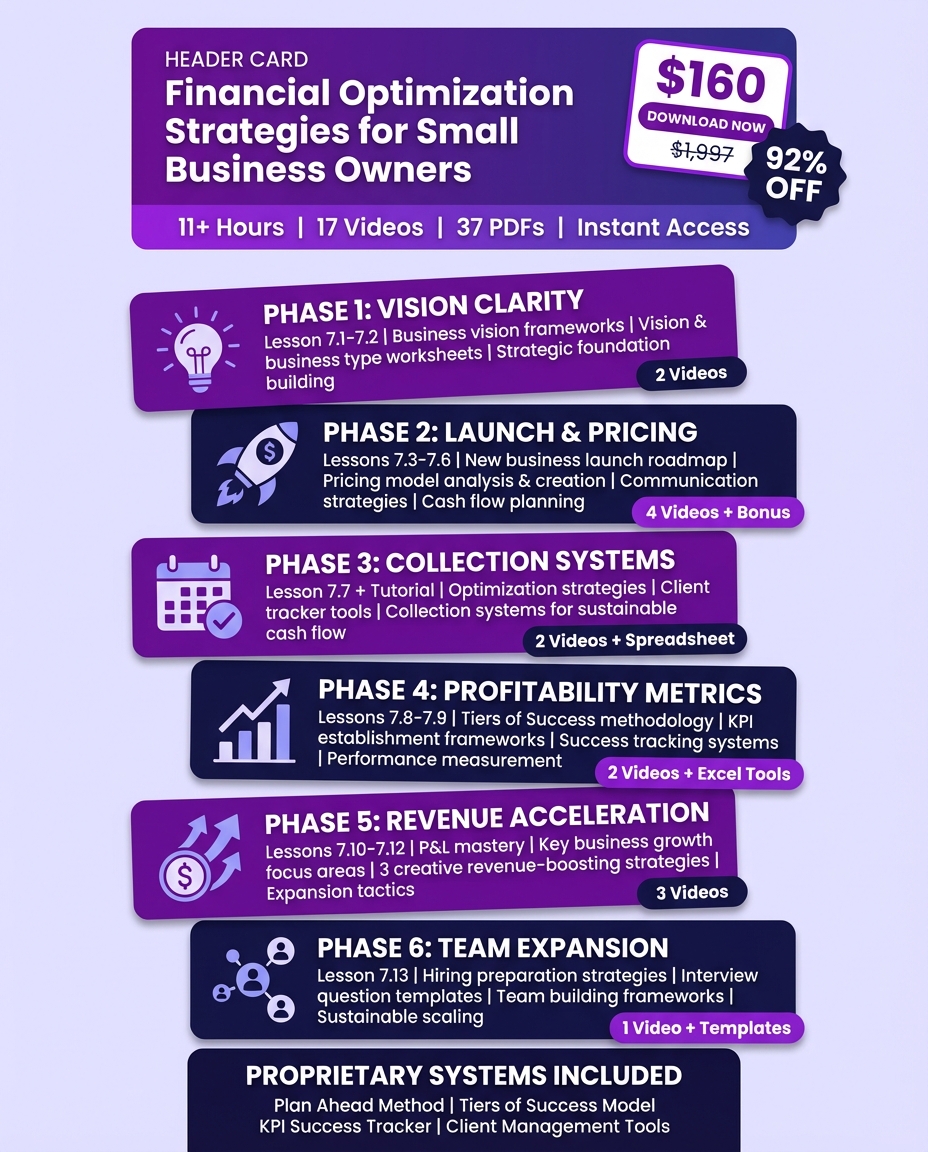
Before You Buy Financial Optimization Strategies for Small Business Owners by Kelsa Dickey: Everything You Need to Know
Financial Optimization Strategies for Small Business Owners is a $1,997 course by Kelsa Dickey that teaches financial coaches a framework-driven methodology for working with small business clients on pricing, revenue, and cash flow across 17 lessons. Before you spend $1,997, you deserve a clear-eyed look at what the course actually contains, who it genuinely serves, where its limitations are, and how to know whether you are the right buyer. You can see the full course breakdown on Course To Action.
This is not a promotional piece. It is a structured evaluation designed to help you make a well-informed decision.
What the Course Is, at Its Core
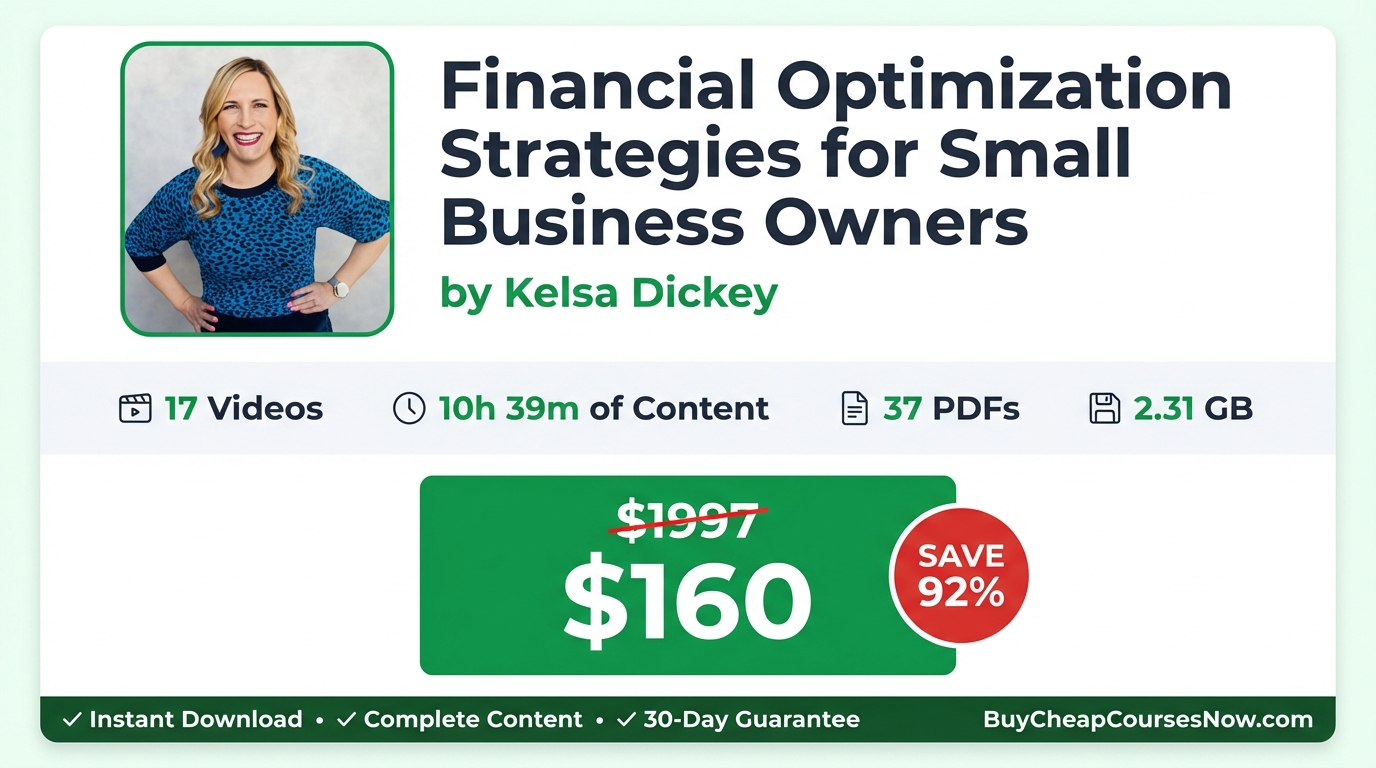
Kelsa Dickey is a financial coach with 12 years of experience working specifically with small business owners. Her central thesis — which the entire course is built around — is that most business owners who struggle financially are not struggling because of personal failings. The core insight is that they are struggling because their pricing model is structurally broken.
This is a meaningful reframe. The standard narrative around small business financial problems is personal: you need more discipline, better habits, or tighter tracking. Dickey's course argues that before any of that, you need to know whether your pricing actually works — and most people have never done the math to find out.
The course runs 17 lessons and is priced at $1,997. It is delivered in a coach-training format, meaning the frameworks are designed to be both personally applied and used with clients.
The Frameworks You Are Actually Buying
The course is framework-dense. Here is what you get and what each one does.
Three-Tier Break-Even The Three-Tier Break-Even is Kelsa Dickey's 3-level diagnostic framework for calculating whether a pricing model actually supports the business owner's life. The three tiers are: Business Break-Even (operating costs only), Personal Break-Even (adding the owner's living expenses), and Full Financial Health (retirement, reserves, investment). The most confronting output is the hours-per-week calculation — what your current pricing model actually requires you to work to hit each tier. For many buyers, this calculation reveals that they would need to bill more hours than exist in a week. That is the structural problem the course is designed to surface and fix. EAC Framework (Education-Application-Commitment) The Education-Application-Commitment (EAC) framework is Kelsa Dickey's 3-phase coaching protocol for structuring financial conversations. The phases are: Education (teaching the concept), Application (applying it to the client's actual numbers), and Commitment (securing a specific action). What makes this different is that it turns a loose coaching session into a repeatable protocol with a defined output. Plan Ahead Method Budget A forward-looking budgeting approach that plans for known future expenses rather than just tracking what has already been spent. The distinction matters: most budgets are backward-looking. The Plan Ahead Method is proactive. 10% Revenue Strategies The 10% Revenue Strategies is Kelsa Dickey's compounding growth framework built around three levers: number of customers, average sale value, and purchase frequency. The key takeaway is that a 10% improvement in each lever compounds to a 33% total revenue increase — without requiring new products or markets. Nine Indicators for Raising Prices The Nine Indicators for Raising Prices is Kelsa Dickey's structured checklist of nine signals that a price increase is both justified and viable. It covers demand signals, market positioning, client retention data, value delivery, and time since last increase. Useful for anyone who has been avoiding a rate conversation because they are not sure the market will support it. 9-Area Business Scorecard A health-monitoring tool that tracks nine dimensions of business performance: revenue, profitability, pricing alignment, cash reserves, client retention, and others. Designed to be reviewed regularly, not just when something feels wrong. 7-Step KPI Process The 7-Step KPI Process is Kelsa Dickey's repeatable method for identifying which financial and operational metrics to track, setting meaningful targets, reviewing actuals, and diagnosing variances. This is the instrumentation layer that makes the scorecard actionable.This is one of 7 frameworks in Financial Optimization Strategies for Small Business Owners. The complete breakdown — every framework, every limitation — is available on Course To Action. Start free.
Who This Course Is Genuinely Built For
Be honest with yourself about whether you fit this profile.
Good fit:- Service providers, coaches, and consultants who set rates by looking at competitors rather than doing personal financial math
- Business owners who feel perpetually behind financially despite generating revenue that looks adequate from the outside
- Financial coaches or business coaches who want a framework-based curriculum to use with clients
- Solopreneurs who have never formally calculated what their business needs to generate to support their actual life
- Anyone who has been avoiding their numbers because they expect the results to feel discouraging
- Business owners whose primary problem is not enough leads or clients — this course will not teach you marketing or sales
- Early-stage businesses with no revenue yet — you need customers before pricing optimization matters
- Business owners outside the US who need local-specific financial guidance — the course uses US examples and structures
- Anyone looking for investment strategy, tax optimization, or accounting — this is not that course
Read the Full Financial Optimization Strategies for Small Business Owners Breakdown
The course costs $$1,997. The complete breakdown is $49/year.
Start free — 10 full summaries, no credit card
The Limitations Worth Knowing
No marketing or sales content. The main limitation is that if you complete the course and discover your Tier 3 break-even requires $25,000 per month, the course will help you understand that number and what it means structurally. It will not teach you how to generate $25,000 per month in new business. That is a separate problem requiring separate tools. US-focused financial framework. The break-even math is universal, but the specific financial structures, tax assumptions, and cost-of-living benchmarks are US-based. International practitioners will need to adapt. Coach-training format, not personalized coaching. The frameworks are excellent. The delivery is structured around teaching the frameworks, not around applying them to your specific situation. If you need someone to sit with your actual numbers and work through them with you, this course alone does not provide that. Self-directed pacing. 17 lessons requires discipline to complete without external accountability. If you need structured deadlines and cohort support, check whether the course offers a live or cohort component before purchasing.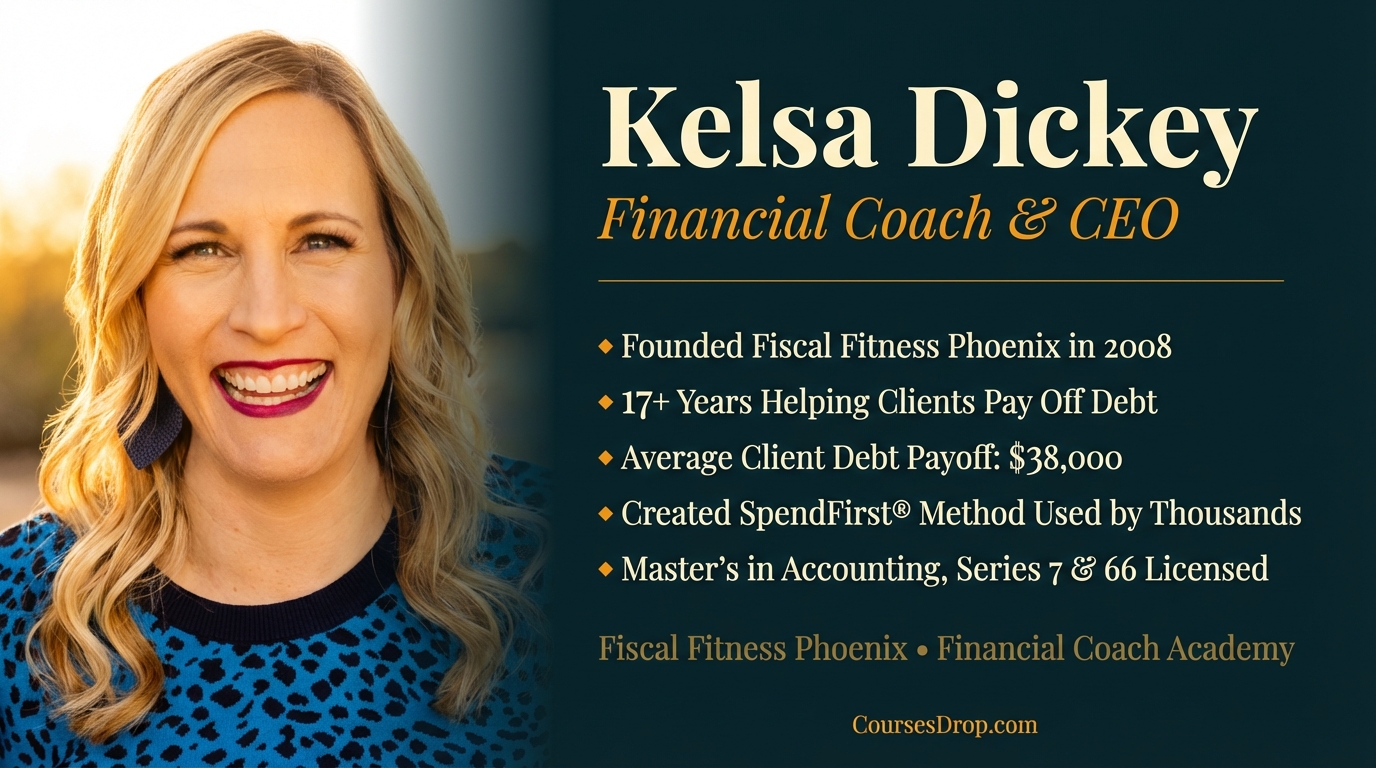
Is the Price Justified?
The honest answer depends entirely on what happens when you run the Three-Tier Break-Even.
If the calculation reveals that your current pricing requires 90 billable hours per week to cover your personal expenses, and you raise your rates by 40% as a result, the course pays for itself in the first month of the corrected pricing structure. The math is direct.
If you already have a well-calibrated pricing model, clear break-even awareness, and an operational cash management system in place, the course is teaching you things you already know. The frameworks are the value. If you already have equivalent frameworks, the marginal value is lower.
In summary, the sweet spot for this purchase is the business owner who has been running on intuition and competitive pricing for years, has a nagging sense that the math does not quite work, and has been avoiding confirming that suspicion because they do not know what to do with the answer. For that person, the course provides both the diagnostic tools and the corrective frameworks in a single package.
The Question to Ask Yourself First
Before purchasing, run this thought experiment: Do you know, right now, the exact monthly revenue your business needs to cover your personal expenses — not just keep the business running, but actually pay you a sustainable wage?
If the answer is no, or if the answer is uncertain, that gap is exactly what the Three-Tier Break-Even is designed to close. The question is whether $1,997 is a reasonable price to pay for that clarity and the frameworks to act on it.
For most service-based business owners who have been avoiding their numbers, it is.
Frequently Asked Questions
Is Financial Optimization Strategies for Small Business Owners worth $1,997?
For financial coaches actively expanding into business clients, yes. The EAC framework and Three-Tier Break-Even provide immediately usable tools. If the diagnostic reveals a structural pricing problem and a coach corrects it, the course pays for itself within the first month of corrected pricing. For coaches still exploring, the price may be high.
What does Financial Optimization Strategies for Small Business Owners actually teach?
The course teaches 7 named frameworks across 17 lessons: Education-Application-Commitment (EAC), Three-Tier Break-Even, 10% Revenue Strategies, Nine Indicators for Raising Prices, 9-Area Business Scorecard, 7-Step KPI Process, and the Plan Ahead Method budget. All are designed for coaches to use with small business clients.
What does Financial Optimization Strategies for Small Business Owners NOT cover?
The course does not cover marketing, sales, lead generation, tax strategy, legal structure, investment decisions, or e-commerce operations. It is focused entirely on financial clarity, pricing structure, and business health metrics. It is also US-centric in its examples.
Who is Financial Optimization Strategies for Small Business Owners best for?
Financial coaches who currently work with individuals and want a structured system for expanding into business clients. Also strong for service providers who set rates based on competitor pricing rather than personal financial math and have never run a proper break-even calculation.
How does Financial Optimization Strategies for Small Business Owners compare to general business coaching courses?
Unlike broad business coaching programs, this course is narrowly focused on financial structure and pricing. It does not cover marketing, sales, or operations. Its strength is depth on structural pricing problems rather than breadth across business topics.
Where can I read a full breakdown of Financial Optimization Strategies for Small Business Owners?
The independent, framework-level course deconstruction is available at Course To Action, covering every named framework, honest limitations, and what the course does not teach.
Start free — no credit card required. Course To Action gives you 10 free summaries so you can read the full breakdown of all 7 frameworks in Financial Optimization Strategies for Small Business Owners before you spend $1,997. The course costs $1,997. A Course To Action membership starts at $49 for 30 days or $399/year — one payment, no subscription, no auto-renewal.
Once you're inside, use the AI "Apply to My Business" tool (3 credits) to apply the Three-Tier Break-Even or the EAC framework to your specific numbers before you commit. Every summary and every lesson also has audio. Course To Action covers 110+ premium courses.
Start free at Course To ActionCourse To Action publishes independent framework-level breakdowns of online courses — the 20% that delivers 80% of the value, so you can make an informed decision before you spend a dollar.
Read the Full Breakdown Before You Spend $$1,997
The course costs $$1,997. The complete breakdown — every framework, every lesson, every limitation — is $49/year.
Know exactly what you're getting before you commit. Every module summarised, every action step extracted. Read or listen — every summary has audio.
Start free — 10 full summaries, no credit card required